Penicillin. Treatments: penicillin - wrongdiagnosis.com. In vitro activity of p-hydroxybenzyl penicillin (penicillin x) and ....

Ingentaconnect substrate specificity of penicillin acylase from ....

Penicillin - definitions from dictionary.com

Penicillin. In. The right-hand image shows a close-up of the novobiocin disk (marked by an arrow on the whole plate). In this case some individual mutant cells in the bacterial population were resistant to the antibiotic and have given rise to small colonies in the zone of inhibition. Antibiotic resistance is not a recent phenomenon. On the contrary, this problem was recognised soon after the natural penicillins were introduced for disease control, and bacterial strains held in culture collections from before "the antibiotic era" have also been found to harbour antibiotic-resistance genes. However, in some cases the situation has now become alarming, with the emergence of pathogenic strains that show multiple resistance to a broad range of antibiotics. One of the most important examples concerns multiple-resistant strains of Staphylococcus aureus in hospitals. Some of these strains cause serious nosocomial (hospital-acquired) infections and are resistant to virtually all the useful antib penicillin
 

Substrate specificity of penicillin acylase from streptomyces ...

Iotics, including methicillin, cephalosporins and other beta-lactams that target peptidoglycan synthesis, the macrolide antibiotics such as erythromycin and the aminoglycoside antibiotics such as streptomycin and neomycin, all of which target the bacterial ribosome. The only compound that can be used effectively against these staphylococci is an older antibiotic, vancomycin, which has some undesirable effects on humans. Recently, some clinical strains of S. aureus have developed resistance to even this compound. Many of the antibiotic-resistance genes of staphylococci are carried on plasmids (see Agrobacterium for discussion of this) that can be exchanged with Bacillus spp. and Streptococcus spp., providing the means for acquiring additional genes and gene combinations. Some are carried on transposons - segments of DNA that can exist either in the chromosome or in plasmids. It is ironic, and tragic, that the bacterium S. aureus that opened the antibiotic era with Fleming's original dis penicillin


| Penicillin vk | Penicillin side effects | Penicillin allergy | Allergic to penicillin | Allergic reaction to penicillin | Penicillin v | Discovery of penicillin |

[ Penicillin and breast feeding ]
penicillin:

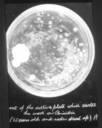
penicillin Hromycin penicillin, Fusidic acid (green disk) and Methicillin. Clear zones of suppression of bacterial growth around the individual antibiotic disks are evidence of sensitivity to these antibiotics. The diameter of the clear zone is related to the initial antibiotic concentration (which differs for the antibiotics on the ring) penicillin, its solubility and its diffusion rate through agar. Standard tests performed on many bacteria by the manufacturers of these assay disks enable the diameter of the clearing zone to be related to the minimum inhibitory concentration (MIC) of each antibiotic for the strain being tested. The MIC can then be compared with the known tissue levels of penicillin.

penicillin These antibiotics when they are administered to patients penicillin, to assess whether the antibiotics would be effective for treatment of particular pathogens. The emergence of antibiotic resistanceThe repeated or continued use of antibiotics creates selection pressure favouring the growth of antibiotic-resistant mutants. These can be detected by comparing the size of clearing zones (or even the complete absence of clearing zones) of bacterial strains in plate assays such as those above. By the use of these disks it is also possible to detect the occurrence of individual mutant cells with antibiotic resistance in a culture of a strain that is sensitive to antibiotics. An example of this is shown in Figure G (below). Figure G. Effects of different antibiotics on growth of a Bacillus strain. The right-hand image shows a close-up of the novobiocin disk (marked by an arrow on the whole plate). In this case some individual mutant cells in the bacterial population were resistant to the antibiotic and have given rise to small colonies in the zone of inhibition. Antibiotic resistance is not a recent phenomenon. On the contrary penicillin, this problem was recognised soon after the natural penicillins were introduced for disease control penicillin, and bacterial strains held in culture collections from before "the antibiotic era" have also be.

penicillin An example of this is shown in Figure G (below). Figure G. Effects of different antibiotics on growth of a Bacillus strain. The right-hand image shows a close-up of the novobiocin disk (marked by an arrow on the whole plate). In this case some individual mutant cells in the bacterial population were resistant to the antibiotic and have given rise to small colonies in the zone of inhibition. Antibiotic resistance is not a recent phenomenon. On the contrary penicillin, this problem was recognised soon after the natural penicillins were introduced for disease control penicillin, and bacterial strains held in culture collections from before "the antibiotic era" have also bee.

penicillin penicillin
penicillin | link block | | | | |
penicillin
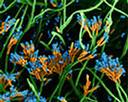
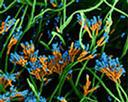
Rience, enable javascript in browser preferences. Contents... Cell Biology Microbiology Immunology Microscopy Interactive... Cell Models Mitosis Meiosis Cell Cycle Cell Cams HowBig? Puzzles Quizzes Get... Stock Video the CDROM Downloads Galleries... Cell Gallery Crystal Gallery Tools... Translate Homework How Penicillin Kills Bacteria Penicillin kills bacteria by interfering with the ability to synthesize cell wall. In this sequence, Escherichia coli were incubated in penicillin for 30 minutes. The bacteria lengthen, but cannot divide. Eventually the weak cell wall ruptures (last panel). You can view the bursting bacteria in a 610K time-lapse movie. To learn more about how penicillin works be sure to check out " What the Heck is Penicillin" at Jack's "Bugs in the News". Improper antibiotic use selects for populations of antibiotic-resistant pathogens. Some bacteria avoid the effect of penicillin by the production of penicillinase, an enzyme that destroys penicillin. A current threat is Methicillin-Resistant Staph aureus (MRSA). Methicillin is a β-lactam antibiotic which acts on cell wall production much like penicillin. MRSA produce β-lactamase which selectively destroys methicillin thereby protecting the bacteria. For more information on how bacteria such as Staph aureus become resistant to penicillin and other antibiotics see the excellent Food and Drug Administration (FDA) site "The Rise of Antibiotic-Resistant Infections". Want to show how penicillin works in your classroom? Download a longer, larger, silent version of the penicil

| Penicillin vk | Penicillin side effects | Penicillin allergy | Allergic to penicillin | Allergic reaction to penicillin | Penicillin v | Discovery of penicillin |

[ Penicillin and breast feeding ]

penicillin© 2005
Penicillin and breast feeding site map
penicillin and breast feeding contacts: info@sony.com