Who discovered penicillin. Yahoo! answers - who discovered penicillin?. The scotsman - ayrshire son of the soil who broke the mould to ....

Amazon.ca: helicobacter pioneers firsthand : accounts from the ....

| Penicillin shot | Buy penicillin | Penicillin inventor | Use of penicillin | Penicillin anti virus | Penicillin reaction | Penicillin used for |

[ Penicillin and breast feeding ]

Who discovered penicillin? - science fact finder

Who discovered penicillin. Efore he had left on vacation, Fleming had piled a number of his Petri dishes to the side of the bench so that Stuart R. Craddock could use his work bench while he was away. Back from vacation, Fleming was sorting through the long unattended stacks to determine which ones could be salvaged. Many of the dishes had been contaminated. Fleming placed each of these in an ever growing pile in a tray of Lysol. Much of Fleming's work focused on the search for a "wonder drug." Though the concept of bacteria had been around since Antonie van Leeuwenhoek first described it in 1683, it wasn't until the late nineteenth century that Louis Pasteur confirmed that bacteria caused diseases. However, though they had this knowledge, no one had yet been able to find a chemical that would kill harmful bacteria but also not harm the human body. In 1922, Fleming made an important discovery, lysozyme. While working with some bacteria, Fleming's nose leaked, dropping some mucus onto the dish. The bact who discovered
 

Find in a library: alexander fleming : the bacteriologist who ...

Eria disappeared. Fleming had discovered a natural substance found in tears and nasal mucus that helps the body fight germs. Fleming now realized the possibility of finding a substance that could kill bacteria but not adversely affect the human body. In 1928, while sorting through his pile of dishes, Fleming's former lab assistant, D. Merlin Pryce stopped by to visit with Fleming. Fleming took this opportunity to gripe about the amount of extra work he had to do since Pryce had transferred from his lab. To demonstrate, Fleming rummaged through the large pile of plates he had placed in the Lysol tray and pulled out several that had remained safely above the Lysol. Had there not been so many, each would have been submerged in Lysol, killing the bacteria to make the plates safe to clean and then reuse. While picking up one particular dish to show Pryce, Fleming noticed something strange about it. While he had been away, a mold had grown on the dish. That in itself was not strange. However who discovered


who discovered penicillin:

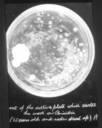
who discovered penicillin Ded who discovered penicillin, contaminated Petri dish. The mold that had contaminated the experiment turned out to contain a powerful antibiotic who discovered penicillin, penicillin. However who discovered penicillin, though Fleming was credited with the discovery who discovered penicillin, it was over a decade before someone else turned penicillin into the miracle drug for the 20th century. How did this Petri dish almost get cleaned before being noticed? How did the mold get onto the dish? Who transformed penicillin into a useful drug? The Chance Discovery On a September morning in 1928 who discovered penicillin, Alexander Fleming sat at his work bench at St. Mary's Hospital after having just returned from a vacation at The Dhoon (his country house) with his family. Before he had le who discovered penicillin.

who discovered penicillin Ft on vacation who discovered penicillin, Fleming had piled a number of his Petri dishes to the side of the bench so that Stuart R. Craddock could use his work bench while he was away. Back from vacation who discovered penicillin, Fleming was sorting through the long unattended stacks to determine which ones could be salvaged. Many of the dishes had been contaminated. Fleming placed each of these in an ever growing pile in a tray of Lysol. Much of Fleming's work focused on the search for a "wonder drug." Though the concept of bacteria had been around since Antonie van Leeuwenhoek first described it in 1683 who discovered penicillin, it wasn't until the late nineteenth century that Louis Pasteur confirmed that bacteria caused diseases. However who discovered penicillin, though they had this knowledge who discovered penicillin, no one had yet been able to find a chemical that would kill harmful bacteria but also not harm the human body. In 1922 who discovered penicillin, Fleming made an important discovery who discovered penicillin, lysozyme. While working with some bacteria who discovered penicillin, Fleming's nose leaked who discovered penicillin, dropping some mucus onto the dish. The bacteria disappeared. Fleming had discovered a natural substance found in tears and nasal mucus that helps the body fight germs. Fleming now realized the possibility of finding a substance that could kill bacteria but not adversely affect the human body. In 1928 who discovered penicillin, while sorting through his pile of dishes who discovered penicillin, Fleming's former lab assistant who discovered penicillin, D. Merlin Pryc.

who discovered penicillin Diseases. However who discovered penicillin, though they had this knowledge who discovered penicillin, no one had yet been able to find a chemical that would kill harmful bacteria but also not harm the human body. In 1922 who discovered penicillin, Fleming made an important discovery who discovered penicillin, lysozyme. While working with some bacteria who discovered penicillin, Fleming's nose leaked who discovered penicillin, dropping some mucus onto the dish. The bacteria disappeared. Fleming had discovered a natural substance found in tears and nasal mucus that helps the body fight germs. Fleming now realized the possibility of finding a substance that could kill bacteria but not adversely affect the human body. In 1928 who discovered penicillin, while sorting through his pile of dishes who discovered penicillin, Fleming's former lab assistant who discovered penicillin, D. Merlin Pryce.

who discovered penicillin who discovered
who discovered penicillin | link block | | | | |
who discovered penicillin
Es of the mold Penicillium glaucum. Louis Pasteur and Jules Francois Joubert, in 1877, observed that cultures of the anthrax bacilli, when contaminated with unidentified molds, became inhibited. In 1897, Ernest Duchesne had completed his Ph.D. on on the evolutionary competition among microorganisms. Specifically, he studied focusing on the interaction between E. coli and Penicillium glaucum. Some of Duchesne observations included how the bacteria was eliminated by the fungus when both were grown on the same culture, and in inoculation of laboratory animals with lethal typhoid bacilli and P. glaucum, the mold prevented the animal from contracting typhoid. Although, he urged that further research be carried out, he was unable to do so. Upon completing his degree, he went into the army and while serving, died of tuberculosis. In the 1920's, there were two unknown scientist, Andre Gratia and Sara Dath who observed a fungal contamination in one of their Staphylococcus aureus cultures that was inhibiting the growth of the bacterium. They identified this as a species of Penicillium and presented their observations as a paper. There was little attention paid to this paper and the two scientist did not pursue this line of research further. Perhaps it was due to the lack of interest by other scientists who had heard their paper, or perhaps there was not a realization as to what they had. Regardless of the reason, these two scientists missed being a major part of the penicillin story in not pursuing this research further. Thus, a number of observations set the stage for Fleming's acci

| Penicillin shot | Buy penicillin | Penicillin inventor | Use of penicillin | Penicillin anti virus | Penicillin reaction | Penicillin used for |

[ Penicillin and breast feeding ]